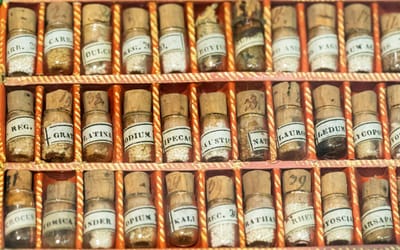
Biochemic Tissue Salts in Practice
An introduction to the biochemic tissue salts developed by Dr Wilhelm Schuessler and their role in supporting physiological balance in clinical practice.
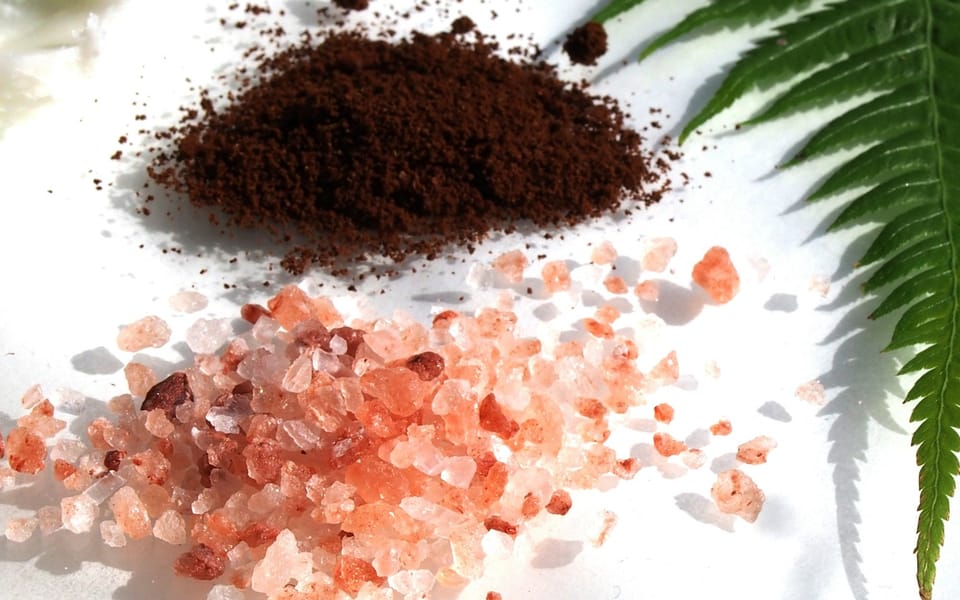
Biochemic tissue salts, also known as cell salts or Schuessler salts, occupy an interesting place in healthcare. Although they are simple mineral preparations, they provide subtle support in situations where the body appears depleted, out of balance, or struggling to maintain normal function.
The system of tissue salts was developed in the nineteenth century by the German physician Dr Wilhelm Heinrich Schuessler.
Schuessler became interested in the mineral composition of human tissue at a time when chemists were analysing the ash of human tissues in order to identify what mineral salts were found within.
From this work it was recognised that a relatively small number of mineral salts consistently appeared in human cells and tissues. These included minerals such as calcium, potassium, sodium, iron, and silica.
Schuessler proposed that disturbances in the balance of these minerals contributed to functional disturbances within tissues. He suggested that small doses of these salts might assist the body in restoring balance.
From this work he identified twelve fundamental tissue salts, each associated with particular tissues and physiological processes within the body.
The twelve salts described by Schuessler are typically prepared in a 6X potency through a process known as trituration (a process also used to prepare homoeopathic remedies).
In trituration, a mineral substance is repeatedly ground with a carrier powder, usually lactose, using a mortar and pestle. The grinding breaks the substance into extremely fine particles and distributes it evenly throughout the lactose.
This grinding and mixing is done in a series of steps. At each stage, a small amount of the substance is combined with a larger amount of lactose and triturated thoroughly. In the case of tissue salts, this process is usually repeated six times in a 1:10 ratio to produce the 6X potency.
Trituration is particularly important when the original substance is insoluble, as is the case with many mineral salts. By grinding the mineral repeatedly with lactose, the particles become finely dispersed, allowing the preparation to be used in tablets and other tissue salt preparations.
Schuessler believed that preparing the salts in this way allowed them to be more readily assimilated by the body.
Schuessler originally described twelve salts, which remain the foundation of the biochemic system:
Within the biochemic tradition, tissue salts are understood as supporting normal physiological processes rather than acting as strong medicinal agents.
They are thought to assist the body in maintaining appropriate mineral balance at a cellular level, particularly where symptoms suggest a disturbance in:
Because of their gentle action, many practitioners find them particularly useful in situations where vitality appears low or where symptoms reflect functional imbalance rather than deep pathology.
In practice, tissue salts act very gently and slowly and can be used in several different ways.
Some practitioners prescribe them according to specific symptom pictures, while others consider broader patterns of tissue weakness or constitutional tendencies. In integrative settings they are often used to gently support physiological function while other therapies address deeper aspects of the case.
For example, Kali Phos is frequently considered in states of nervous exhaustion, mental fatigue, and emotional depletion - situations where the nervous system appears depleted rather than overstimulated.
Tissue salts are generally regarded as very gentle preparations and are widely available in tablet form, most commonly prepared with lactose.
For patients who are lactose intolerant or who need to avoid lactose for other reasons, liquid preparations are also available.
Although tissue salts are gentle and have been in continuous use for well over a century, they do not replace necessary medical care, particularly in situations involving serious illness or ongoing pathology.
If you enjoy exploring these ideas, you may also enjoy the opportunity to think them through with others in my practitioner learning groups Thinking Like a Homoeopath and Clinical Conversations.
Please note: The reflections shared in this Practitioner’s Notebook are intended to encourage curiosity and thoughtful exploration among practitioners and students of natural and integrative health. They are not intended to replace structured professional training, clinical supervision, or independent clinical judgement. Practitioners remain responsible for applying appropriate professional standards and referring patients for medical care where appropriate.
Photo by KARLY VANCUYLENBERG / Unsplash
Become a subscriber receive the latest updates in your inbox.